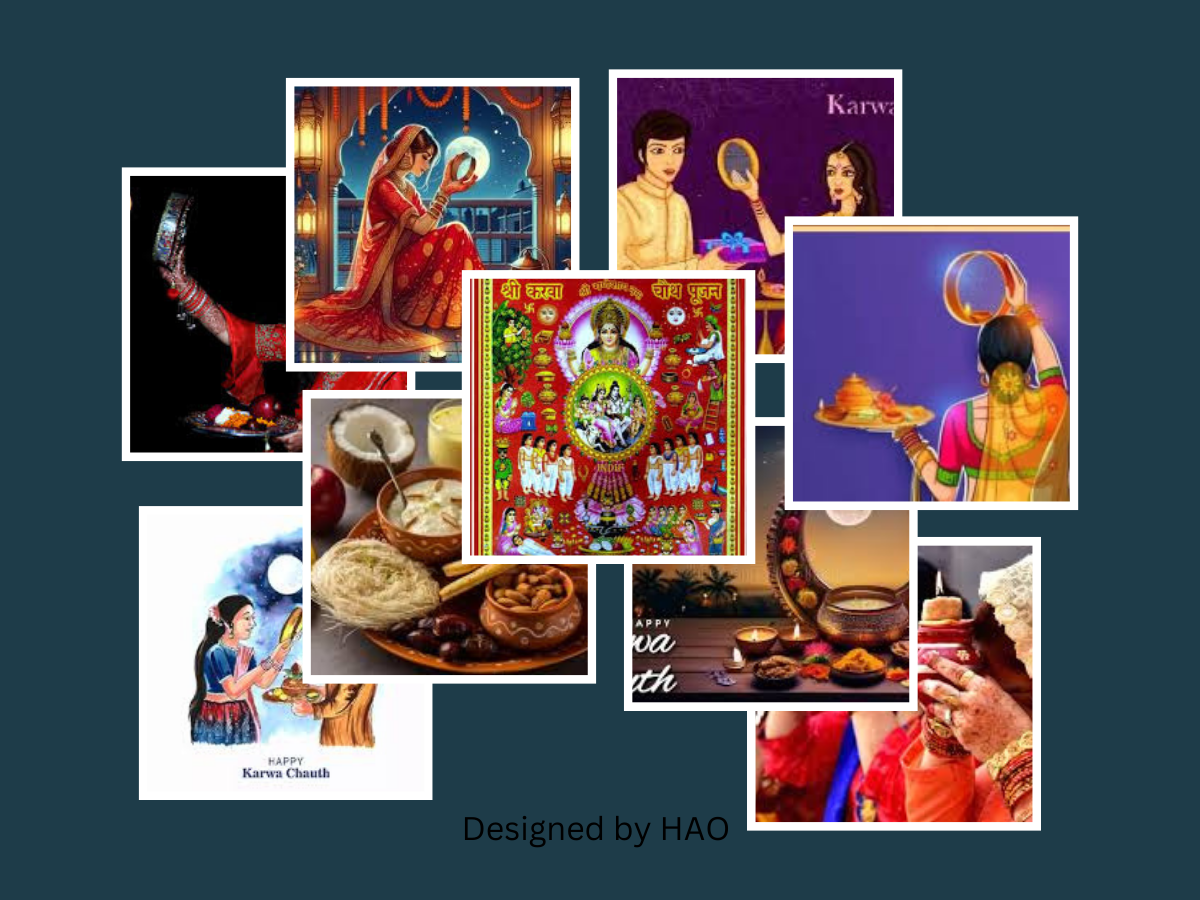
The fasting of Karwa Chauth and its rituals are observed by married women for the long life of their husbands. Married women worship Lord Shiva and His family, including Lord Ganesha, and break the fast only after sighting and making offerings to the moon. Let’s explore the Karva Chauth story in English, its origin and significance, the vrat katha, the samagri list, puja vidhi, etc., in detail.
Karva Chauth Story In English
Here is a question on everyone’s mind: What is the story of Karva Chauth? So, today let’s explore the story: “A long long time ago, there lived a beautiful princess by the name of Veeravati. When she was of marriageable age, Veeravati was married to a king. On the occasion of the first Karva Chawth after her marriage, she went to her parents’ house.”
“After sunrise, she observed a strict fast. However, the queen was too delicate and couldn’t stand the rigours of fasting. By evening, Veeravati was too weak and fainted. Now, the queen had seven brothers who loved her dearly. They couldn’t stand the plight of their sister and decided to end her fast by deceiving her. They made a fire on the nearby hill and asked their sister to see the glow. They assured her that it was the moonlight, and since the moon had risen, she could break her fast.”
“However, the moment the gullible queen ate her dinner, she received the news that her husband, the king, was dead. The queen was heartbroken and rushed to her husband’s palace. On the way, she met Lord Shiva and his consort, Goddess Parvati. Parvati informed her that the king had died because the queen had broken her fast by watching a false moon. However, when the queen asked her for forgiveness, the goddess granted her the boon that the king would be revived but would be ill.”
“When the queen reached the palace, she found the king lying unconscious with hundreds of needles inserted in his body. Each day, the queen managed to remove one needle from the king’s body. Next year, on the day of Karva Chauth, only one needle remained embedded in the body of the unconscious king.”
“The queen observed a strict fast that day, and when she went to the market to buy the karva for the puja, her maid removed the remaining needle from the king’s body. The king regained consciousness and mistook the maid for his queen. When the real queen returned to the palace, she was made to serve as a maid.”
“However, Veeravati was true to her faith and religiously observed the Karva Chauth vrat. Once, when the king was going to some other kingdom, he asked the real queen (now turned maid) if she wanted anything. The queen asked for a pair of identical dolls. The king obliged, and the queen kept singing a song, “Roli ki Goli ho gayi… Goli ki Roli ho gayi” (the queen has turned into a maid and the maid has turned into a queen).”
“On being asked by the king as to why she kept repeating that song, Veeravati narrated the entire story. The king repented and restored the queen to her royal status. It was only the queen’s devotion and her faith that won her husband’s affection and the blessings of Goddess Parvati.”

Karwa Chauth Origin | Significance
Karwa Chauth day coincides with Sankashti Chaturthi during the Kartik month as per the Purnimanta calendar followed in North India. Several religious books, including Dharamasindhu, Nirnayasindhu, and Vratraj, mention Karwa Chauth as Karaka Chaturthi.
Both Karaka and Karwa refer to a small pitcher that is used during Puja and given as charity or Dan for the well-being of the family. It is mentioned that only women have the right to fast on Karwa Chauth, as the fasting benefits of Karaka Chaturthi fructify to women only. The fasting on Karwa Chauth is done not only for the well-being and long life of the husband but also for the sons, grandsons, wealth, and everlasting prosperity of the family.
The fast and puja, which is performed on Karaka Chaturthi, is mainly dedicated to Goddess Parvati. Goddess Parvati, being Akhand Saubhagyavati, is worshipped first during the Puja, followed by Lord Shiva, Lord Kartikeya, and Lord Ganesha. Women also worship Goddess Gaura and Chauth Mata, who represent Goddess Parvati herself, on the day of Karwa Chauth.
Karwa Chauth Deity(s)
Goddess Parvati is the main deity of Karwa Chauth. Along with Goddess Parvati, her other family members, i.e., husband Lord Shiva and children Lord Kartikeya and Lord Ganesha, are also worshipped.
- Goddess Parvati
- Chauth Mata
Karva Chauth Fast Rules
- Applying Mehndi, i.e., henna a day before Karwa Chauth
- Applying Alta, i.e., Mahawar in feet and hands (especially in Rajasthan)
- Daylong fast without food and water
- Dressing like a bride before Karwa Chauth Puja
- Preparing the puja alter especially with Karwa Chauth Calendar
- Worshipping Goddess Parvati in the evening
- Narrating and listening the legends of Karwa Chauth
- Waiting for the moonrise to break the fast
- Sighting moon through sieve or transparent cloth
- Giving Arghya, i.e., offering water to moon God
- Sighting husband after moon sighting
- Breaking the fast by accepting water from the husband
- Taking meal which is prepared for the Puja
Karva Chauth Fast Timing
On Karva Chawth, women observe a fast from sunrise to moonrise for the safety and longevity of their husbands or future partners.
Karva Chauth Puja Samagri | Karva Chauth Puja Samagri Vidhi | Sargi
Karwa Chauth is a significant Hindu festival celebrated by married women for the well-being and longevity of their husbands. Sargi and Puja Samagri play a crucial role in the rituals observed during Karwa Chauth. Here is a comprehensive list of essential items for Sargi and Puja Samagri.
1. Sargi Thali
The Sargi Thali is an integral part of the Karwa Chauth festival, which is a day marked by fasting from sunrise to moonrise. The Sargi is a pre-dawn meal that is consumed by the fasting women, traditionally given by their mother-in-law.
- Fruits
- Dry fruits
- Cooked food
- Sweets
- A glass of water or milk
This meal is meant to sustain them throughout the day until the moon is sighted. It is a wholesome platter that includes a variety of foods to provide energy and nutrition.
The Sargi Thali not only serves as sustenance but also represents the blessings and good wishes from the elder family members to the fasting women.
2. Feni or Seviyan
Feni, or Seviyan, is an essential component of the Sargi Thali, symbolising a nutritious start to the day-long fast. These vermicelli noodles are either eaten as a sweet dish, often cooked in milk and garnished with dry fruits, or as a savory item, depending on personal preference.
- Sweet Feni: Prepared with milk, sugar, and cardamom.
- Savory Seviyan: Cooked with vegetables and spices for a hearty meal.
Feni or Seviyan should be light yet energizing, providing sustenance for the fasting period ahead. It’s important to consume this dish early in the morning before sunrise, as it marks the beginning of the Karwa Chauth fast.
3. Fresh Fruits
Incorporating fresh fruits into the Sargi Thali is essential for providing energy and hydration throughout the day of fasting. A variety of seasonal fruits should be chosen to ensure a range of vitamins and minerals are consumed.
Fresh fruits are not only a source of natural sugars and fiber but also help in maintaining a feeling of fullness.
While there is no strict rule on the types of fruits to include, common choices are:
- Apples
- Oranges
- Bananas
- Pomegranates
- Grapes
Each fruit offers its own set of benefits, such as apples for fiber, oranges for vitamin C, and bananas for potassium. It’s important to consume these fruits in the morning to sustain energy levels for the day ahead.

4. Dry Fruits
Dry fruits are an essential part of the Sargi Thali, symbolizing longevity and health. They provide the necessary nutrients and energy for the day-long fast during Karwa Chauth. A variety of dry fruits are included, each with its own significance.
- Almonds (Badam) – for sharp mind and protection from diseases
- Walnuts (Akhrot) – for a healthy heart
- Cashews (Kaju) – for strength
- Raisins (Kishmish) – for blood purification
- Pistachios (Pista) – for a robust immune system
It is believed that consuming dry fruits at Sargi helps in maintaining energy levels throughout the fast. This is crucial as no food or water is consumed from dawn until moonrise.
Just as Dhanteras is a time to celebrate wealth and abundance, including dry fruits in the Sargi is a way to ensure that the body is well-nourished and capable of sustaining the fast. It’s a small but significant way to honor the spirit of the festival.
5. Mathri
Mathri is a traditional flaky biscuit that is a staple in the Sargi Thali. It is savored for its crisp texture and delightful taste, often seasoned with spices like carom seeds (ajwain) or cumin seeds (jeera).
- Prepare the dough with flour, ghee, and spices.
- Roll out and cut into small discs.
- Deep fry until golden brown.
Mathri can be made in advance and stored in an airtight container to maintain its crispness. This convenience makes it an ideal food item for the fasting day, as it can be consumed quickly during the pre-dawn Sargi meal.
Ensure that the mathris are prepared with cleanliness and devotion, as they are part of the essential items in the Sargi Thali. The preparations for Karwa Chauth are not just about the food but also about the spirit in which it is made and consumed.
6. Coconut
The coconut holds a place of great significance in Karwa Chauth rituals. It is considered a symbol of purity and is used in various forms during the day. The hard shell of the coconut represents the endurance of the marriage, and the water within symbolizes the purity of the couple’s love.
- A whole coconut is offered to deities as part of the puja samagri.
- Coconut water is consumed by women during the pre-dawn Sargi meal to keep hydrated during the fast.
- Grated coconut is often used in the preparation of traditional sweets and dishes for the festival.
The coconut is not just a dietary staple but also a sacred offering that embodies the essence of marital fidelity and prosperity.
7. Sweets
Sweets play a crucial role in the celebration of Karwa Chauth, symbolizing the sweetness of the relationship between a husband and wife. Offering sweets during the puja is a gesture of goodwill and blessings for a long and healthy life for the spouse.
- Kaju Katli
- Besan Laddoo
- Gulab Jamun
- Jalebi
- Soan Papdi
Sweets are not just a treat for the taste buds but also an integral part of the puja thali, adding to the festive spirit of the occasion.
It is important to ensure that the sweets are prepared or bought fresh to maintain the sanctity of the puja. The variety of sweets included can vary according to personal preferences and regional traditions.
8. Tea or Coffee
As the dawn breaks on Karwa Chauth, the ritual of Sargi begins, and with it, the consumption of tea or coffee marks the start of the day. Tea or coffee serves as a gentle stimulant, providing the energy to sustain the day-long fast ahead. It’s important to choose a beverage that is comforting and aligns with one’s personal preference, as this might be the only warm drink until moonrise.
While the choice between tea and coffee is a personal one, it’s essential to ensure that it is consumed in moderation to maintain the sanctity of the fast.
The inclusion of tea or coffee in the Sargi is symbolic of warmth and awakening, preparing the body and mind for the day’s observances. Whether it’s a strong cup of tea or a soothing coffee, this beverage is a small yet significant part of the Sargi thali.
9. Milk
Milk holds a special place in the pre-dawn meal of Sargi, as it is considered to be nourishing and satiating. It is often consumed plain or used to prepare tea or coffee, which are also part of the Sargi. During the fast, milk is avoided until the moonrise.
Milk is also a key ingredient in many sweet dishes that are savored during Sargi, such as kheer or vermicelli pudding. These dishes are not only delicious but also provide the necessary energy to sustain throughout the day.
Milk’s significance extends beyond nutrition; it is also a symbol of purity and is used in various rituals during the Karwa Chauth Puja.
For those observing the fast, it is important to consume milk in moderation during Sargi to ensure a balance of nutrients and to avoid feeling overly full.

10. Puja Thali
The Puja Thali is an integral part of Karwa Chauth celebrations. It is a special plate used to arrange all the sacred items needed for the Puja rituals. The Thali typically includes a Diya, Roli, Chawal, Kumkum, Haldi, a small container of water, and flowers.
- Diya (lamp) to invoke the divine
- Roli for tilak
- Chawal (rice) as an offering
- Kumkum to apply on the forehead
- Haldi (turmeric) for its purifying properties
- Water in a small container for the rituals
- Flowers to adorn the Thali and offer to the deities
Purnima Puja involves meditation, Prasad distribution, gratitude, and symbolic rituals. Specific items are required for the rituals, offering spiritual benefits and growth.
Carefully selecting and arranging these items on the Puja Thali not only adheres to the traditional practices but also adds to the sanctity of the occasion.
11. Karwa (Clay Pot)
The Karwa, or clay pot, is a central element in the Karwa Chauth ceremony. It symbolizes the well-being and prosperity of the family. Traditionally, the Karwa is filled with water and used during the Puja to offer prayers to the moon.
During the Puja, the Karwa is often decorated with beautiful designs and sometimes adorned with colorful threads and beads. It’s not just a vessel; it’s a symbol of love and prayer for the husband’s long life.
The Karwa should be handled with care and reverence, as it holds a sacred place in the rituals of Karwa Chauth.
12. Kumkum
Kumkum is a traditional red powder used for marking the forehead during Hindu rituals and is an essential item for Karwa Chauth Puja. It symbolizes good fortune and is believed to bring positive energy to the festivities.
- Apply a small dot of kumkum on the forehead of the goddess idol or picture used for the puja.
- Married women also apply kumkum along the parting of their hair, signifying marital status.
Kumkum holds great significance in Hindu culture, representing both the strength of a woman’s marriage and her commitment to her spouse.
13. Haldi (Turmeric)
Haldi, or turmeric, is a vibrant yellow spice that is not only essential in Indian cooking but also holds a significant place in rituals and ceremonies. Turmeric symbolizes purity, fertility, and prosperity, making it a vital component of the Karwa Chauth puja thali.
During the puja, haldi is used to create auspicious markings and is often mixed with water or milk to form a paste. This paste is then applied to the idols of deities and sometimes to the participants of the puja as a blessing.
Turmeric’s antiseptic properties are also believed to ward off evil spirits and ensure the well-being of those observing the fast.
The use of haldi during Karwa Chauth is a testament to its enduring cultural and spiritual significance in Hindu traditions. It is one of the many items that help create a sacred space for harmony and blessings during the festival.
14. Chawal (Rice)
Chawal, or rice, is a staple ingredient in the Karwa Chauth Sargi. It is not only consumed as part of the pre-dawn meal but also holds a significant place in the puja rituals. During the puja, rice grains are used in combination with kumkum and turmeric to create auspicious symbols and are offered to the deities.
Rice is also integral to the preparation of traditional dishes for the Sharad Purnima festival, which often coincides with Karwa Chauth. On this night, dishes like Kheer, a rice pudding, are prepared and left under the moonlight to absorb its essence.
Rice symbolizes prosperity and fertility, making it an essential element of the Sargi Thali. Its presence is believed to bring good fortune and well-being to the family.
15. Diya
The Diya, or oil lamp, is a quintessential element of Karwa Chauth. It represents the light that wards off evil and brings prosperity and joy to the household. During the festival, the diya is lit to perform the puja and to welcome the moon.
The lighting of the diya is not just a ritual but a moment of reflection and prayer for the well-being of one’s spouse.
It is important to ensure that the Diya is kept burning throughout the evening. This is a symbol of hope and the eternal bond of marriage. The flame of the Diya is also a reminder of the inner light that guides us through life’s challenges, resonating with the essence of Diwali, where light triumphs over darkness.
16. Agarbatti (Incense Sticks)
Agarbatti, or incense sticks, are an integral part of the Karwa Chauth puja. They are used to create a serene and fragrant atmosphere conducive to worship. Lighting incense is a symbolic act of purifying the surroundings and inviting positivity.
The scent of the incense is believed to carry the prayers of the devout to the heavens.
During the puja, the incense sticks are lit before the deities in a specific sequence. It is important to ensure that the incense sticks are of good quality and that the fragrance is appropriate for the occasion.
- Light the incense stick and place it in the incense holder.
- Allow the smoke to waft through the puja area.
- Keep the incense away from flammable materials.
- Extinguish the incense stick safely after the puja.
17. Matchbox
A matchbox is an essential item in the Karwa Chauth puja samagri list. It is used to light the Diya or lamp, which is a significant part of the puja ritual. The flame of the Diya represents purity, goodness, and the presence of the divine.
The matchbox should be of good quality to ensure that the Diya can be lit without any hindrance. It symbolizes the ignition of divine blessings and the warding off of evil spirits.
While the matchbox itself is a small and often overlooked item, its role is crucial in the successful completion of the Karwa Chauth rituals. Ensure that you have a spare matchbox in case the first one runs out or gets damp.
18. Ghee
Ghee, or clarified butter, is a staple in traditional Indian cooking and rituals. It holds a special place in Karwa Chauth celebrations, both for its culinary and ceremonial importance. During the fast, ghee is used to prepare various dishes that are consumed before sunrise. It is also an integral part of the puja thali, used for lighting the diya, which is essential for the evening puja ceremony.
Ghee symbolizes purity and is believed to bring good health and prosperity to the family. Its inclusion in the Karwa Chauth puja emphasizes the sanctity of the occasion.
For those unfamiliar with the quantity and type of ghee needed, here’s a simple guide:
- Pure cow ghee is preferred for its purity and health benefits.
- Approximately 100-150 grams of ghee is sufficient for both cooking and puja purposes.
- Ensure the ghee is fresh and free from any additives for the best experience.
19. Water
Water holds a pivotal role in the Karwa Chauth rituals. It is not only essential for the preparation of food items but also for the Puja ceremonies. During the Puja, water is used to wash the Karwa before it is filled with fresh water, symbolizing purity and life.
Water is also poured over the gifts to bless them, and it is used to anoint the idols and photographs of deities worshipped during the festival.
On this auspicious day, a Kalash (sacred water vessel) is often included in the Puja Thali. It is filled with water and topped with a coconut, which is then used in the rituals. The presence of a Kalash during worship is deeply significant in Hindu tradition, representing the source of life and the divine.
20. Flowers
Flowers hold a special place in the Karwa Chauth celebrations, symbolizing beauty, purity, and the blossoming of love in a marriage. They are an essential part of the puja thali and are used to adorn the altar and the idols.
- Marigold: Known for its vibrant color and auspiciousness.
- Rose: Represents love and is often used to express affection.
- Jasmine: Its fragrance is believed to be pleasing to the deities.
- Lotus: Symbolic of purity and often associated with Goddess Lakshmi.
Flowers are not just decorative elements but carry deep symbolic meanings in the rituals. They are carefully selected to ensure they align with the spirit of the occasion.
It is important to choose fresh flowers to maintain the sanctity of the puja. The selection of flowers may vary based on regional practices and personal preferences.
21. Roli
Roli is an integral part of the Karwa Chauth puja samagri. It is a sacred red powder used for applying the auspicious tilak on the forehead during the puja ceremony. The application of roli is believed to ward off evil and bring good fortune to the observing women.
Roli is also mixed with water to create a paste that is used to make the ceremonial markings, known as ‘chandan’, on the puja items. This ritualistic adornment is a key aspect of the preparations for Karwa Chauth.
The vibrant red color of roli is symbolic of prosperity and love, which are the core essences of the Karwa Chauth festival.
While preparing the puja thali, ensure that a small container of roli is included alongside other essential items such as kumkum, haldi, and chawal.
22. Channi (Sieve)
The Channi (sieve) is an essential item in the Karwa Chauth puja. It is used by married women to view the moon through it during the puja ritual. The sieve symbolizes the filtering of pure love from any negative energies or thoughts.
- The channi should be made of metal, preferably with fine mesh.
- It is often decorated with flowers or a small garland before the puja.
The act of looking at the moon through the Channi before breaking the fast is a moment filled with emotion and devotion, signifying the bond between the couple.
23. Vrat Katha Book
The Vrat Katha book is an integral part of the Karwa Chauth puja. It contains the stories and legends associated with the fast, which are read during the puja ceremony. The reading of the Vrat Katha is believed to invoke divine blessings and is a crucial step in the observance of the fast.
The Vrat Katha book not only guides the rituals but also instills a sense of sacredness and purpose in the fasting process.
It is important to handle the book with clean hands and a pure heart, as it is a medium through which the fast’s spiritual essence is conveyed. The Katha narrates the significance of Karwa Chauth and the virtues of a devoted wife, emphasizing the importance of faith and dedication in marital life.
24. Sindoor
Sindoor holds a significant place in Hindu traditions, especially during Karwa Chauth. Married women apply sindoor on their foreheads as a symbol of their marital status and the well-being of their husbands. During the Karwa Chauth puja, sindoor is used to adorn the goddess idols, representing the power and protection bestowed upon the family.
Sindoor is not just a mark of matrimony but also a prayer for the husband’s long life.
The application of sindoor is accompanied by prayers and rituals that resonate with the essence of Kali Puja, where offerings are made to invoke blessings and empowerment. The vibrant red color of sindoor is emblematic of the energy and devotion that women pour into the observance of this auspicious day.
25. Red Cloth and more
The red cloth is an essential part of the Karwa Chauth puja items, symbolizing prosperity and fertility. It is used to cover the puja thali and sometimes the karwa itself. Along with the red cloth, there are several other items that are crucial to complete the puja ritual.
- A small mirror, which is used by the women to view the moon before breaking the fast.
- A sieve or channi, through which the moon is viewed.
- A piece of jewelry or a shringar item, which is often gifted to the woman by her husband or mother-in-law.
The arrangement of these items is not just a tradition but a means to create a sacred atmosphere. It is believed that each item carries a specific energy that contributes to the worship.
Also Read: Why Is Navratri Celebrated For 9 Days? | Amazing Nav Ratri
Shri Karva Chauth Vrat Katha
A long time ago, in the city of Indraprasthapur, there was one Brahmin named Vedsharma. Vedsharma was happily married to Leelavati and had seven great sons and one deft daughter named Veeravati. Due to being the sister of seven brothers, she was pampered not only by her parents but also by her brothers.
Once she got mature, she was married to a suitable Brahmin boy. After marriage, when Veeravati was with her parents, she observed the Karwa Chauth fast for the long life of her husband along with her sisters-in-law. During the fasting of Karwa Chauth, Veeravati could not bear the hunger. Due to weakness, she fainted and fell on the ground.
All the brothers could not bear the miserable condition of their adorable sister. They knew that Veeravati, a Pativrata, would not take any food unless she saw the moon, even if it cost her life. All the brothers together made a plan to trick the sister into breaking her fast. One of the brothers climbed on the distant tree of Vat with a sieve and lamp. When Veeravati regained consciousness, the rest of the brothers told her that the moon had risen and brought her to the roof to see the moon.
Veeravati saw the lamp behind the sieve on a distant vat tree and believed that the moon had risen behind the thicket of trees. To get over her hunger, she immediately made offerings to the lamp and broke the fast.
When Veeravati started having the meal, she got all sorts of bad omens. In the first bite, she found the hair, in the second bite, she sneezed, and in the third bite, she got an invitation from her in-laws. After reaching her husband’s home for the first time, she found the dead body of her husband.
On seeing the dead body of her husband, Veeravati started crying and blamed herself for committing some mistake during the fasting of Karwa Chauth. She started mourning inconsolably. On hearing her mourning, Goddess Indrani, the wife of God Indra, arrived to console Veeravati.
Veeravati asked Indrani why she got such a fate on the day of Karwa Chauth and begged to make her husband alive. On seeing the remorse of Veeravati, Goddess Indrani told her that she broke the fast without giving Argha (offering) to the moon, and due to that, her husband met an untimely death. Indrani advised Veeravati to observe Chauth fasting each month throughout the year, including the fasting of Karwa Chauth, and assured that her husband would come back alive.
After that, Veeravati observed monthly fasting with complete trust and all rituals. Finally, due to accumulating Punya of those fasts, Veeravati got her husband back.
Also Read: 6 Best Ram Navami Celebration In India | Jai Shri Ram Story
Karva Chauth Pooja Vidhi | Karva Chauth Pooja Vidhi In English
Our religious books, including Dharamasindhu, Nirnayasindhu, and Vratraj, mention Karwa Chauth as Karak Chaturthi. Both Karak and Karwa refer to a small pitcher that is used during puja and given as charity or Dan for the well-being of the family. It is mentioned that only women have the right to fast on Karwa Chauth. The fasting on Karwa Chauth is done not only for the well-being and long life of the husband but also for the sons, grandsons, wealth, and everlasting prosperity of the family.
Karwa Chauth coincides with Sankashti Chaturthi, a fasting day observed for Lord Ganesha. However, on the day of Karwa Chauth, Lord Shiva and His family, including Goddess Parvati, Lord Ganesha, and Lord Kartikeya, are worshipped. Goddess Parvati, being Akhand Saubhagyavati, is worshipped first during the puja, followed by Lord Shiva, Lord Kartikeya, and Lord Ganesha. Women also worship Goddess Gaura and Chauth Mata, who represent Goddess Parvati herself on the day of Karwa Chauth.
Sankalp
On the day of fasting, after taking a morning bath, women should take the pledge, which is called Sankalp, to keep the fast for the well-being of the husband and the family. It is also recited during Sankalp that the fasting would be without any food or water, and the fast would be broken after sighting the moon. The Mantra to chant while taking the pledge –
मम सुखसौभाग्य पुत्रपौत्रादि सुस्थिर श्री प्राप्तये करक चतुर्थी व्रतमहं करिष्ये।
Translation: It means “I would observe the fasting of Karak Chaturthi for the well-being of the husband, sons, and grandsons and to gain fixed wealth.”

Karwa Chauth Puja
According to Vratraj, the best time to perform Karwa Chauth Puja is during Sandhya time, which starts after sunset. Hence, please note down the city-based Karwa Chauth Puja Timings after setting the location for your city.
Karwa Chauth Puja is focused on seeking the blessings of Goddess Parvati. Women either draw Goddess Gaura and Chauth Mata on the wall or use a Chauth Mata image on the printed Karwa Chauth Puja Calendar to worship Mata Parvati. Goddess Gaura and Chauth Mata are representations of Goddess Parvati. The Mantra that should be recited during Parvati Puja is –
नमः शिवायै शर्वाण्यै सौभाग्यं संतति शुभाम्। प्रयच्छ भक्तियुक्तानां नारीणां हरवल्लभे॥
Translation: It means “O beloved consort of Lord Shiva, please bestow long life of the husband and beautiful sons to your women devotees.” After Goddess Gaura, Lord Shiva, Lord Kartikeya, and Lord Ganesha are worshipped.
Usually, women perform puja in a group and narrate the story of the Karwa Chauth Mahatamya, known as the magnanimous Karwa Chauth fasting.
After Puja, Karwa should be given as charity to the Brahmin or some eligible woman. The Karwa, or Karak, should be filled with water or milk, and precious stones or coins should be dropped in it. Karwa should be donated to some Brahmin or Suhagan women. The Mantra that should be chanted while donating Karwa –
करकं क्षीरसम्पूर्णा तोयपूर्णमथापि वा। ददामि रत्नसंयुक्तं चिरञ्जीवतु मे पतिः॥
Translation: “O milk-filled Karwe with precious stones; I donate you so that my husband is long-lived.”
Worship God Moon
After the puja, women should wait for the moon to rise. Women should worship God Chandra and, after making an offering to him, should break the fast.
What Can We Eat During Karva Chauth Fast?
Here are some dishes that will keep your energies high till it is time to break the fast.
1. Mathri
The deep-fried Mathri is a great snack option for early morning. A simple combination of maida and salt, this crispy snack is tasty and filling at the same time. Have it with a cup of tea, and it will satiate your hunger for long.
2. Kalakand
Milk-based sweets are quite a hit during sargi. Milk is considered to be a wholesome meal in itself. Add to that a dessert, and it will be a win-win situation for your taste buds and energy. One such sweet is Kalakand, which keeps you full for longer.
3. Feniya
Another milk dessert that is a usual suspect in Punjabi households during Karwa Chauth is feniya. Cooked along with milk and saffron strands, the aromatic dessert is served chilled or hot with crushed dry fruits.
4. Paratha
A stuffed paratha or two is likely to keep you full for a longer period of time. You can have aloo paratha or even a simple and light subzi with a chapatti, and that would suffice. Carbohydrates provide you with that extra boost of energy so that you can function throughout the day.
5. Phirni
Sweets form an important part of the sargi meal. While phirni might appear to be similar to kheer at first, the texture and flavor are quite different. It is thicker and creamier, although the ingredients used for making both of them are the same, i.e., milk, rice, sugar, and dry fruits.
6. Fresh Fruits
Fruits and dry fruits are well-known for their wholesome and filling properties. This fresh fruit recipe is a combination of fruits and sprouts, and a bowl of this will keep you satiated for long.
When to Break Karva Chauth Fast
The Karva Chauth fast is broken after sighting the moon, which typically occurs in the evening. Here’s how to determine when to break the fast:
- Moonrise Time: The fast is traditionally broken after the moon rises, so it’s important to check the local moonrise time for your area.
- Rituals: Before breaking the fast, women often perform a small puja, offering prayers and gratitude.
- First Bite: After sighting the moon, women usually look at their husbands through a sieve (chalni) and take the first sip of water and a bite of food, marking the end of the fast.
How To Break Karva Chauth Fast
1. A Karva Chauth thali has to be prepared after the moon is visible. The Karva Chawth thali must have an oil lamp or diya made out of wheat flour. Some mustard oil should be poured into it. After that, a cotton wick should be put into it to help in lighting the Diya. A glass or ‘lotta’ and a mathri should also be placed on the plate. The water in the lotta should be the water that had been offered in the evening puja. This is how the Karva Chauth thali is prepared.
2. Wear a red chunri and remove your slippers. Stand on a stick or piece of wood. The lit diya has to be placed in the sieve or ‘channi.’ Women need to see the moon through the sieve.
3. The lit diya then has to be thrown backwards. Then women should pour water downwards in the direction of the moon. The moon should then be seen directly without the sieve. This water should not be consumed. It should be offered in the direction of the moon. 5-6 mathris are also to be thrown in the same direction as an offering.
4. Women, then, see their husbands through the sieve and pray for their longevity and well-being.
5. The husband then offers some water and mathri to the wife and breaks her fast. The women then take blessings from the elders. She then gives out the Baya that her mother has sent to the elder family members.
6. Dinner can be consumed after the above steps have been followed. It is considered to be one of the most difficult fasts. The fast starts before sunrise and can be only broken after worshipping the moon at night. Generally, the sky stays cloudy on that day. Therefore, it might take up to 8-9 PM before you can spot the moon. Nothing is to be eaten or drunk during the fast.
Can We Keep Karva Chauth Fast During Periods
There is absolutely no problem when it comes to observing the fast, even if you are menstruating. The one thing that you need to take care of is that if you have a clotting or bleeding disorder, then you should think twice. Because your body gets dehydrated during the fasting period, this can lead to an increase in the clotting tendency. The risk of clotting becomes higher because during the menstrual cycle, the clotting mechanism of your body works well. So when there is a loss of water. If you have a clotting tendency and you also get dehydrated while observing a fast, then the clotting becomes even faster, which can lead to a lot of problems.
Karva Chauth Fast in Pregnancy
When you are carrying a baby, you might think twice before fasting. But if you are properly hydrated and your nutrition is also correct, a few hours of fasting will not be harmful. But in today’s time, the diet of any person is not proper. So, without an optimum nutrition level, it might not be a good idea to fast when you are pregnant. Because, karva Chawth is a long day fast so, consult with your doctor before keeping the fast. Also, pregnant women with any medical problem should avoid fasting. Because fasting might worsen the medical condition and put the pregnancy at risk.
Can Husband Keep Karva Chauth Fast
Yes, husbands can keep the Karva Chauth fast, although traditionally it is observed by wives for the well-being and longevity of their husbands. In recent years, some husbands have chosen to observe the fast in solidarity with their wives as a gesture of love and support. The essence of the festival is about the bond between partners, so it’s perfectly acceptable for husbands to participate if they wish to do so. It can be a meaningful way to strengthen their relationship and show mutual respect.
Can Unmarried Girl Keep Karva Chauth Fast
Yes, unmarried girls can keep the Karva Chauth fast if they wish. Although it is traditionally celebrated by married women for their husbands’ well-being, some unmarried women participate as a way to express their hopes for future relationships. It can be a meaningful gesture for them, and there are no strict rules preventing them from observing the fast. Ultimately, it’s a personal choice, and if it holds significance for them, they are free to celebrate it.
How to Break Karva Chauth Fast for Unmarried
Breaking the Karva Chawth fast for unmarried women can be a special moment, even if the tradition is primarily associated with married women. Here’s how to do it:
- Timing: The fast is typically broken after sighting the moon. Ensure you know the moonrise time in your area.
- Prayers: Before breaking the fast, you can offer a prayer or a wish for love and happiness in your future relationships.
- Sighting the Moon: Look for the moon, and once you see it, you can offer your gratitude and make a wish.
- Offerings: Traditionally, you may use a sieve (chalni) to view the moon through it. This is symbolic and adds to the ritual.
- First Bite: After sighting the moon, take the first sip of water and a bite of food. You can choose something special to break your fast, like sweets or fruits.
- Celebration: You might want to celebrate with family or friends. Sharing the experience can make it more meaningful.
- Reflect: Take a moment to reflect on your hopes and aspirations regarding love and relationships.
Frequently Asked Questions
1. What is the significance of Karva Chauth?
Answer: Karva Chawth is a festival where married women fast for the longevity and well-being of their husbands, symbolizing love and devotion.
2. How do you celebrate Karva Chauth?
Answer: Celebrations typically involve a day-long fast, prayers, and rituals, including decorating the home and dressing in traditional attire.
3. What are the rituals of Karva Chauth?
Answer: Key rituals include waking up early for a pre-dawn meal (sargi), performing puja in the evening, and breaking the fast after sighting the moon.
4. Can unmarried women keep Karva Chauth fast?
Answer: Yes, unmarried women can observe the fast as a way to express their hopes for future relationships and marital happiness.
5. What is the story behind Karva Chauth?
Answer: The festival is rooted in various legends, most notably the tale of Veeravati, who fasted for her husband’s life, showcasing devotion and love.
6. When is Karva Chauth celebrated in 2024?
Answer: In 2024, Karva Chauth will be celebrated on October 30.
7. What should you eat before breaking the Karva Chauth fast?
Answer: Women often break their fast with sweets, fruits, or traditional dishes prepared for the occasion, starting with water and a small bite of food.
8. How to prepare for Karva Chawth?
Answer: Preparation involves planning the day’s rituals, arranging offerings, and shopping for traditional attire and festive food items.
9. What is the meaning of Karva in Karva Chauth?
Answer: “Karva” refers to a clay pot, symbolizing prosperity and fertility, which is used during the rituals of the festival.
10. Can husbands keep Karva Chauth fast?
Answer: Yes, some husbands choose to fast in solidarity with their wives, emphasizing love and partnership in the relationship.
Conclusion: In this article, we have read the Karva Chauth story in English, its origin, history, sargi, puja thali, karwa chauth puja, etc. Karva Chawth is a traditional festival where married women fast for their husbands’ longevity, rooted in legends like that of Veeravati. Over time, it has evolved to celebrate love and partnership, welcoming participation from unmarried women, emphasising devotion and the enduring bonds between couples.